Pelvic Floor Dysfunction and Constipation: How Are They Linked?

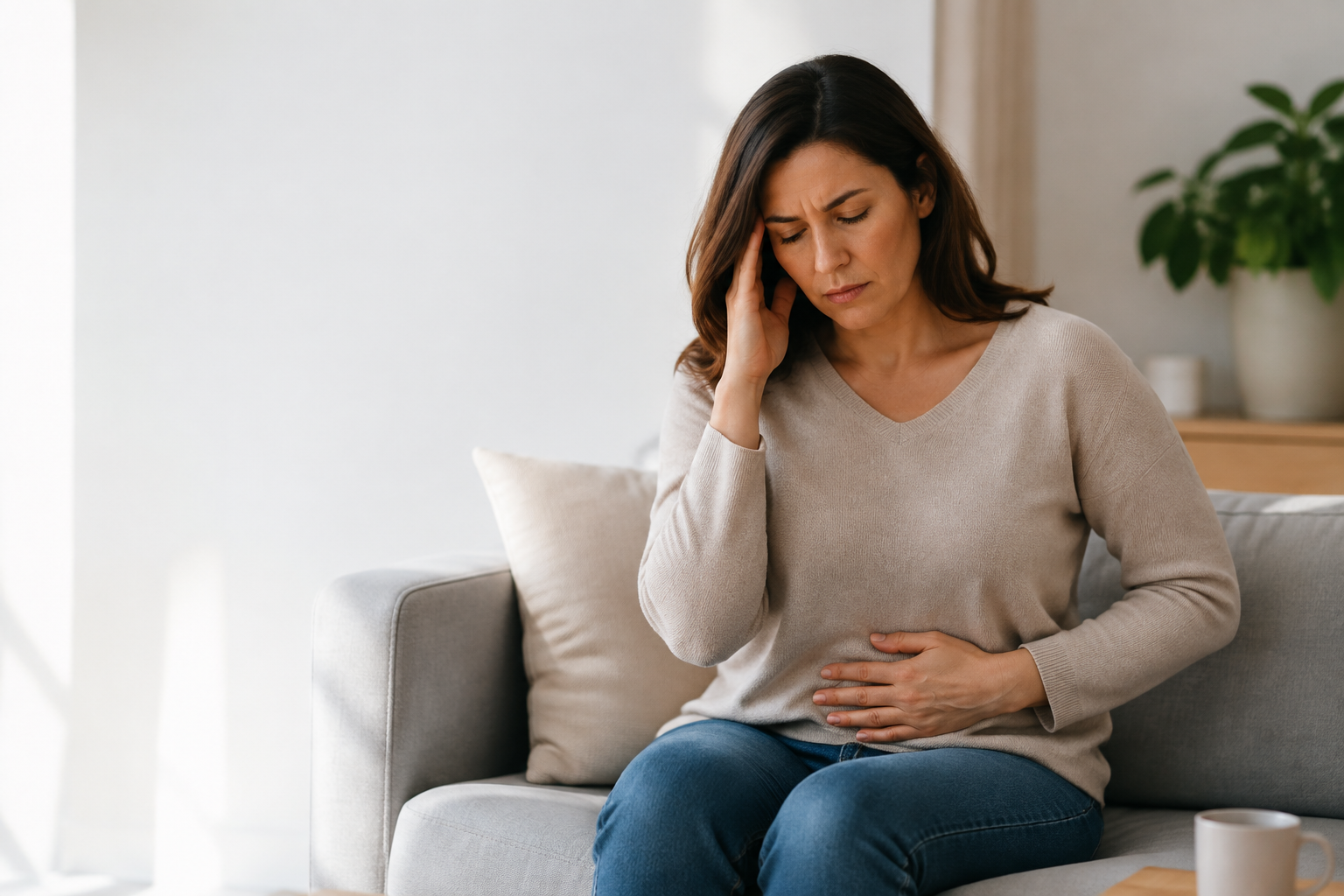
Constipation can affect bowel-emptying mechanics and pelvic floor symptoms.

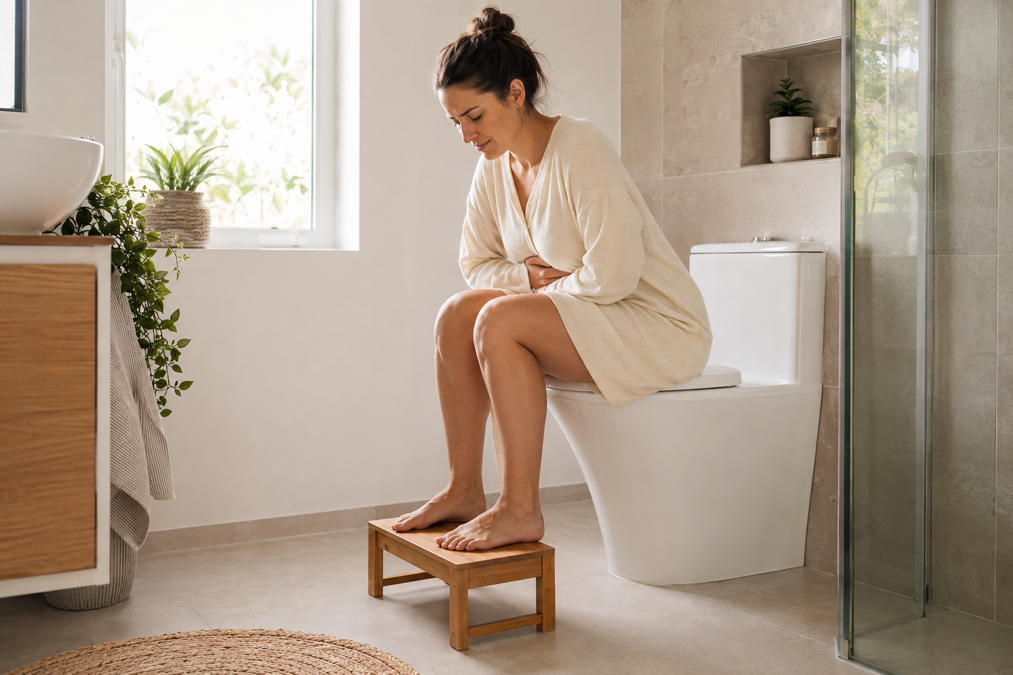
Constipation is not only a digestive issue. Passing a bowel motion requires the abdominal muscles, diaphragm and pelvic floor to work together. When stools are hard, bowel motions are infrequent or emptying requires repeated straining, this coordination can become more difficult.

For some people, constipation and pelvic floor dysfunction occur together. The pelvic floor may have difficulty relaxing during a bowel motion, or repeated straining may aggravate pelvic pressure, heaviness, pain or prolapse symptoms.

How the Pelvic Floor Supports Bowel Emptying

The pelvic floor supports the bladder, bowel and pelvic organs and helps maintain continence. During a bowel motion, however, these muscles need to lengthen and relax while pressure from the abdomen helps move stool through the rectum.
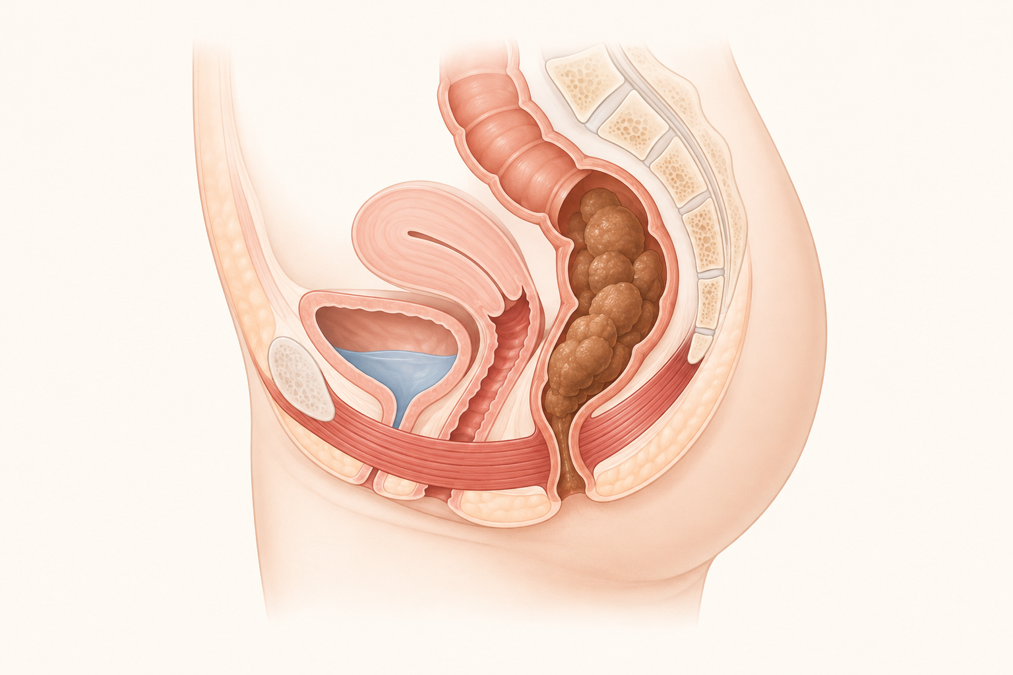
The pelvic floor must coordinate with the abdomen and relax appropriately during bowel emptying.

If the pelvic floor contracts instead of relaxing, or does not relax sufficiently, emptying may feel blocked or incomplete. This is often described as a defecatory disorder or dyssynergic defecation.

Common signs may include:

  • Straining during bowel movements
  • Spending a long time on the toilet
  • Feeling that the bowel has not emptied completely
  • Returning to the toilet repeatedly
  • Using the fingers or vaginal support to assist emptying

Research by Bharucha and Lacy (2020) explains that constipation can have different causes, including slow bowel transit and difficulty coordinating the muscles involved in emptying. This is why constipation treatment should be based on the individual cause rather than assuming everyone simply needs more fibre.

How Constipation May Affect Pelvic Floor Symptoms

Repeated straining increases pressure through the abdomen and pelvic cavity. Constipation does not automatically cause pelvic floor dysfunction, but it can aggravate symptoms when the pelvic floor muscles or pelvic support tissues are already under strain.

Possible symptoms include:

  • Difficulty starting or completing a bowel movement
  • A sensation of incomplete emptying
  • Pelvic floor or anal pain during or after bowel movements
  • Pelvic heaviness, pressure or vaginal bulging
  • Urinary urgency, leakage or difficulty emptying the bladder
  • The need to strain or use manual support to empty the bowel

Constipation has also been identified as one of several factors associated with pelvic organ prolapse. A systematic review and meta-analysis by Fitz et al. (2023) found an association between constipation and prolapse. However, prolapse can also be influenced by childbirth history, age, body weight, connective tissue and other factors.

How Pelvic Floor Physiotherapy May Help

Pelvic floor physiotherapy begins by identifying what is making bowel emptying difficult.

An assessment may consider:

  • Bowel frequency and stool consistency
  • Toileting position and straining habits
  • Breathing and abdominal pressure management
  • Pelvic floor muscle relaxation and coordination
  • Symptoms of pain, pressure or incomplete emptying

Treatment is individualised and may include:

  • Education about normal bowel function and stool consistency
  • A more effective toileting position and emptying technique
  • Breathing strategies to reduce unnecessary straining
  • Pelvic floor relaxation and coordination training
  • Biofeedback or other retraining strategies when appropriate
  • Advice about physical activity, fluid and fibre intake
  • Medical or dietetic referral when required

Pelvic floor treatment is not always about strengthening. If the muscles are overactive or poorly coordinated, treatment may initially focus on learning to relax and lengthen the pelvic floor during bowel emptying.

Research by Wallace et al. (2019) describes pelvic floor physiotherapy as functional retraining that may address strength, endurance, relaxation and coordination according to the person’s individual presentation.

For people with a confirmed defecatory disorder, anorectal biofeedback may also be helpful. Bharucha and Lacy (2020) report that these conditions often respond to biofeedback-based retraining.

When Should Constipation Be Medically Assessed?

Please speak with your GP if your constipation is new, persistent or worsening. Seek medical advice promptly if you notice bleeding, unexplained weight loss, significant pain or other concerning changes.

An Individualised Approach Matters

Constipation can be influenced by stool consistency, medication, diet, bowel transit, pelvic floor coordination or a combination of factors. The most appropriate treatment therefore depends on what is contributing to your symptoms.

At Pelvic Prime & Physiotherapy, we assess pelvic floor function together with bowel-emptying habits to develop an individualised management plan.

If constipation is contributing to pelvic pain, pressure, prolapse symptoms or difficulty emptying, a pelvic health physiotherapy assessment can help identify an appropriate treatment approach.

Book a Pelvic Health Assessment

If constipation is affecting your pelvic health, contact Pelvic Prime & Physiotherapy in Brisbane to arrange a personalised pelvic floor and bowel assessment.

Research Sources

Bharucha AE, Lacy BE. (2020). Mechanisms, evaluation, and management of chronic constipation. Gastroenterology, 158(5), 1232-1249.e3.

Fitz FF, et al. (2023). Lifestyle and comorbidities as risk factors for pelvic organ prolapse: a systematic review and meta-analysis. International Urogynecology Journal.

Wallace SL, Miller LD, Mishra K. (2019). Pelvic floor physical therapy in the treatment of pelvic floor dysfunction in women. Current Opinion in Obstetrics & Gynecology, 31(6), 485-493.
Running After Childbirth: When Is It Safe to Start?

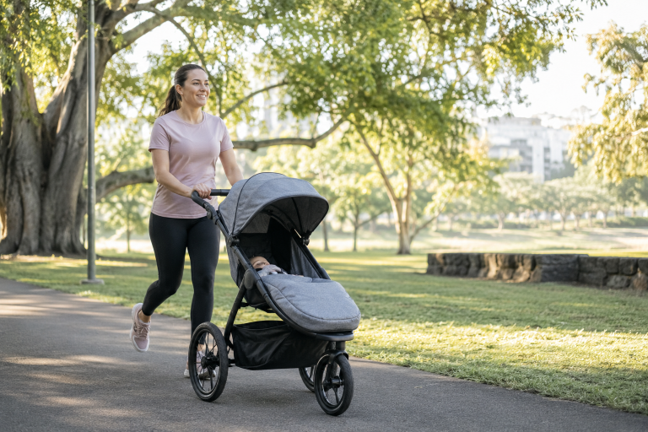
For many new mothers, returning to running is an important goal. Running may provide fitness, stress relief, social connection and valuable time for yourself.

However, returning to running after childbirth involves more than waiting for a particular date. Pregnancy and birth affect the pelvic floor, abdominal wall, ligaments, joints and overall physical capacity.

A safe return should therefore be based on your recovery, symptoms and ability to manage impact, not only the number of weeks since birth.

When Can You Start Running After Childbirth?

The Returning to Running Postnatal guideline by Goom, Donnelly and Brockwell (2019) suggests waiting until at least 12 weeks postpartum before considering a return to running.

However, 12 weeks should be viewed as the earliest point for an individual assessment and a gradual walk-run program, not an automatic clearance for unrestricted running.

Recovery continues beyond three months. Selman et al. (2022) suggest that recovery of the pelvic floor muscles and associated connective tissues may continue for four to six months. Chu et al. (2019) also found that pregnancy-related changes in joint laxity may remain present around four to five months postpartum.

For this reason, even when pelvic floor function appears satisfactory, we generally recommend using the first three to six months to rebuild lower-limb strength, joint control, core function and impact tolerance.

A gentle walk-run program may be appropriate from around three months for selected women, while continuous, higher-volume or higher-intensity running may be better delayed until closer to six months.

The appropriate timing depends on birth recovery, symptoms, previous running experience, strength and response to impact-based testing.

Signs You May Need More Rehabilitation

Running places repeated impact through the feet, legs, pelvis and trunk. The pelvic floor, abdominal muscles and lower-limb muscles must work together to manage this load.

Symptoms that may indicate a need for further assessment include:

  • Urinary or bowel leakage
  • Pelvic heaviness, pressure or vaginal bulging
  • Pelvic, perineal or lower abdominal pain
  • Hip, pelvic girdle or lower back pain
  • Pain or pulling around a caesarean or perineal scar
  • Difficulty controlling the bladder during exercise
  • Abdominal doming or reduced abdominal control
  • Symptoms that appear during running or later that day

Mild symptoms do not necessarily mean that you must stop exercising completely. However, they may indicate that your exercise intensity, impact level or running progression needs to be modified.

What Does a Postnatal Running Assessment Include?

A pelvic health physiotherapy assessment looks beyond pelvic floor strength alone.

Depending on your history and goals, the assessment may consider:

  • Pelvic floor strength, relaxation and coordination
  • Bladder, bowel and prolapse symptoms
  • Abdominal wall function and abdominal separation
  • Breathing and pressure management
  • Hip, gluteal and calf strength
  • Single-leg control and balance
  • Walking, squatting, hopping and jogging tolerance
  • Caesarean or perineal recovery
  • Previous running experience and current fitness
  • Sleep, fatigue, breastfeeding and energy availability

Research by Christopher et al. (2024) recommends considering physical capacity, pelvic floor symptoms, medical and psychological factors and previous training history when determining readiness to run after childbirth.

A pelvic health physiotherapist can identify which areas need rehabilitation before or during your return to running.

How Pelvic Floor Physiotherapy Can Help

Postnatal physiotherapy should prepare the whole body for the demands of running, not only strengthen the pelvic floor.

Treatment may include:

  • Pelvic floor strengthening, relaxation or coordination training
  • Abdominal and trunk rehabilitation
  • Hip, gluteal and calf strengthening
  • Single-leg control and balance training
  • Hopping and impact preparation
  • Breathing and pressure-management strategies
  • Bladder or bowel symptom management
  • Scar rehabilitation when required
  • Advice about running load and progression

Not everyone needs the same pelvic floor exercises. Some women need to improve strength and endurance, while others may need to address muscle overactivity, pain or difficulty relaxing the pelvic floor.

Even when pelvic floor function is satisfactory, further rehabilitation may be needed to restore joint control, lower-limb strength and tolerance to repeated impact.

Start With a Gradual Walk-Run Program

The first postpartum run does not need to be continuous.

Research by Deering et al. (2024) supports beginning with a gradual walk-run program, progressively increasing running duration and intensity and continuing targeted strength training.

A starting program may involve alternating short periods of comfortable jogging with walking. Running time, distance and speed should not all be increased at once.

Your response during the session and over the following 24 hours can help guide progression. If you develop leakage, pelvic heaviness, pain or significant fatigue, the running load may need to be reduced or adjusted.

Recovery also depends on sleep, breastfeeding, nutrition, hydration and the amount of physical and emotional load you are already managing.

An Individualised Return to Running

Returning to running after childbirth should not be based on pressure to ‘bounce back’. It should be a progressive process that reflects your tissue recovery, strength, joint control, symptoms and personal goals.

At Pelvic Prime & Physiotherapy, we assess pelvic floor function, abdominal recovery, lower-limb strength, impact tolerance and movement control before developing an individualised return-to-running plan.

Whether you are preparing for your first postpartum run or experiencing leakage, heaviness or pain while running, a postnatal physiotherapy assessment can help you progress with greater confidence.

Book a Postnatal Running Assessment

If you are considering running after childbirth, contact Pelvic Prime & Physiotherapy in Brisbane to arrange a postnatal pelvic floor and return-to-running assessment.

Research Sources

Goom T, Donnelly G, Brockwell E. (2019). Returning to running postnatal: Guidelines for medical, health and fitness professionals managing this population.

Christopher SM, Donnelly G, Brockwell E, et al. (2024). Clinical and exercise professional opinion of return-to-running readiness after childbirth: an international Delphi study and consensus statement. British Journal of Sports Medicine, 58(6), 299-312.

Deering RE, Donnelly GM, Brockwell E, et al. (2024). Clinical and exercise professional opinion on designing a postpartum return-to-running training programme: an international Delphi study and consensus statement. British Journal of Sports Medicine, 58(4), 183-195.

Selman R, Early K, Battles B, et al. (2022). Maximizing recovery in the postpartum period: a timeline for rehabilitation from pregnancy through return to sport. International Journal of Sports Physical Therapy, 17(6), 1170-1183.

Chu SR, Boyer EH, Beynnon B, Segal NA. (2019). Pregnancy results in lasting changes in knee joint laxity. PM&R, 11(2), 117-124.

GOLF INJURIES: PREVENTION AND RECOVERY TIPS FOR GOLFERS

A Golfer’s Guide to Injury Prevention and Recovery

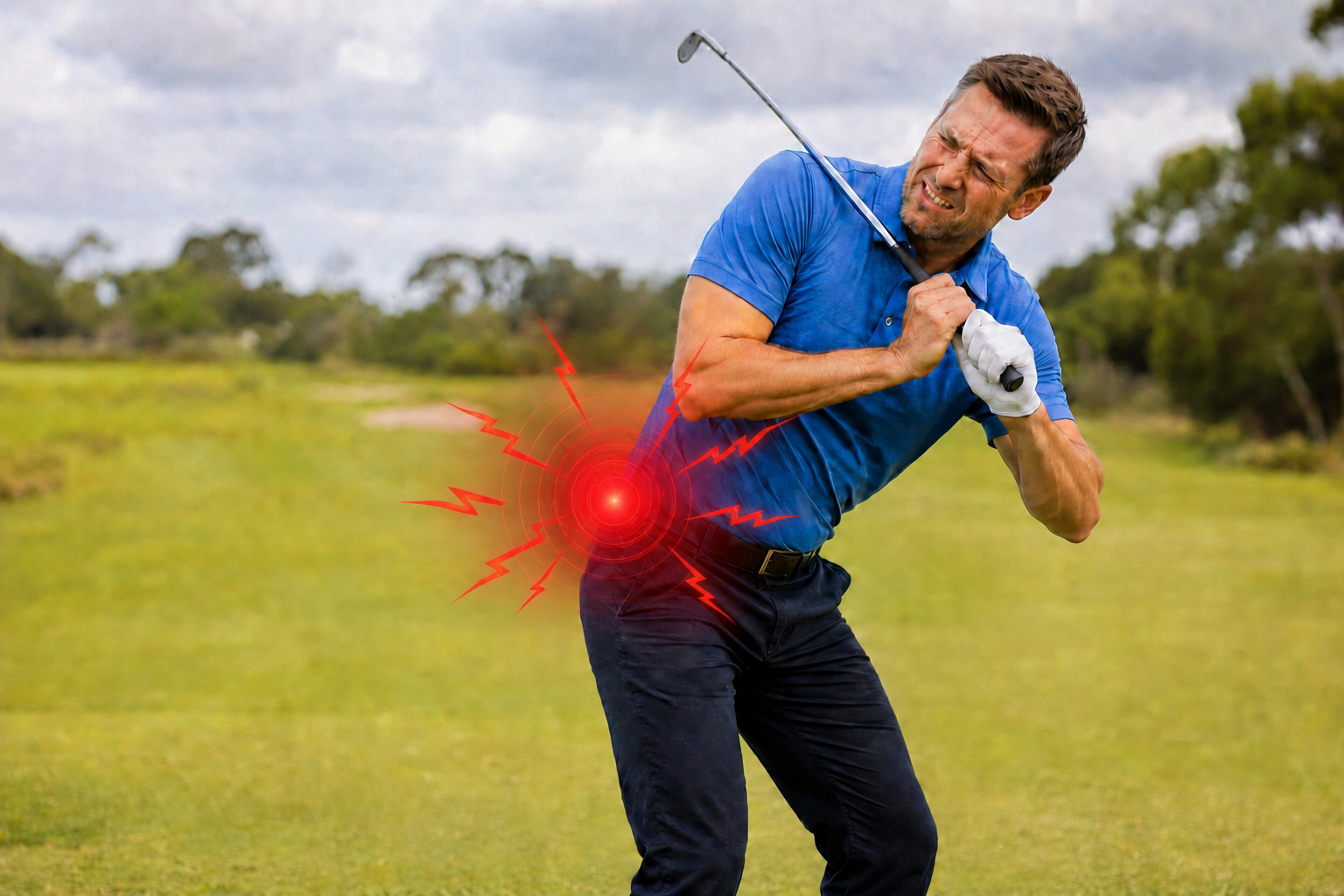
Golf is a highly repetitive sport that places rotational and loading demands on the spine, hips, shoulders, elbows and wrists. Injuries may develop after a sudden incident, but many golf-related problems build gradually when playing or practice load exceeds the body’s current capacity.

Pain does not always mean that you need to stop golf completely. A physiotherapy assessment can help identify the movements and physical demands that aggravate your symptoms, guide appropriate rehabilitation and plan a graded return to practice and play.

Common Golf Injuries

Lower Back Pain

Lower back pain is consistently reported as one of the most common golf-related injuries. The golf swing requires coordinated movement through the hips, pelvis, trunk and upper body, repeated many times during practice and play.

A recent systematic review by Watson et al. (2024) found that evidence linking specific swing characteristics with lower back pain remains limited and conflicting. This means that assessment should look beyond a single idea of “poor technique” and consider playing volume, recent changes in practice, strength, mobility, previous injury and how the individual golfer moves.

Golfer’s Elbow and Wrist Injuries

The elbow, wrist and hand are common sites of golf-related pain. Symptoms may be associated with repeated gripping, high practice volume, striking the ground or mat, an abrupt change in equipment or technique, or reduced tolerance to load.

Treatment depends on the structure involved and may include temporary modification of aggravating practice, progressive strengthening of the forearm and grip, mobility work and a gradual return to hitting balls. Persistent pain, swelling, loss of movement or pain after a clear impact should be appropriately assessed.

Shoulder Pain

The shoulders contribute to club control and the rotational movement of the swing. Pain may arise from the rotator cuff, joint or surrounding muscles, and may be influenced by the volume of play, previous injury and the way the shoulder works with the trunk and upper back.

A golf physiotherapy assessment can examine shoulder strength and movement, trunk rotation and the specific phase of the swing that reproduces symptoms. Rehabilitation can then be matched to the golfer rather than applying the same exercises to everyone.

Golf Injury Prevention Strategies

Injury prevention is not based on one perfect exercise or swing. A practical approach is to prepare the body for golf, build physical capacity and avoid sudden increases in the number of holes played, range balls hit or high-effort swings performed.

A golf-specific plan may include:

  • A dynamic warm-up before practice or play
  • Progressive strength training for the trunk, hips, shoulders and forearms
  • Mobility exercises where a relevant restriction has been identified
  • Gradual progression of playing and practice volume
  • Recovery between demanding sessions
  • Early modification and assessment when pain begins to persist

Research by Ehlert (2020) found that strength and conditioning programs can improve golf performance measures such as clubhead speed, ball speed and distance. Direct evidence that these programs prevent golf injuries is still developing, so prevention advice should be individualised rather than presented as a guarantee.

A Practical Pre-Game Warm-Up

A useful warm-up should gradually increase movement and prepare you for the speed and rotation of the golf swing. It does not need to be long or exhausting.

Before playing, consider:

  • A few minutes of brisk walking or other light activity
  • Comfortable trunk, hip and shoulder movements
  • Dynamic mobility exercises relevant to your own restrictions
  • Practice swings that gradually increase in range and speed
  • Starting with shorter clubs before progressing to longer, higher-effort shots

A systematic review by Ehlert and Wilson (2019) found that several golf warm-up approaches may improve performance, while static stretching alone was not supported as the best preparation. Fradkin et al. (2004) also found improved clubhead speed following a golf-specific warm-up program. Evidence for direct injury prevention in golfers remains less certain, but warming up is a sensible way to prepare for the physical demands of play.

Golf Physiotherapy Assessment

A golf physiotherapy assessment begins with the golfer, not just the swing. Your physiotherapist may review the location and behaviour of your pain, recent changes in playing load, previous injuries, strength, mobility and the movements required for your game.

When relevant, the assessment may also include golf-specific movements or video of the swing to identify when symptoms occur. The goal is not to rebuild every golfer into one “ideal” technique. It is to understand which factors are clinically relevant and which can be modified without unnecessarily disrupting performance.

Personalised Golf Rehabilitation

Rehabilitation should reflect the golfer’s diagnosis, current capacity, goals and access to practice. Depending on the injury, treatment may include education, load modification, mobility work, progressive strength and power training, golf-specific drills and a staged return to the range and course.

A useful return-to-golf plan progresses more than pain alone. It may consider the number of swings tolerated, club selection, swing intensity, range volume, recovery after practice and the ability to complete several holes without a significant symptom flare.

If pain is affecting your swing, limiting your practice or repeatedly returning after golf, a physiotherapy assessment can help identify an appropriate starting point and guide your return to play.

Research Sources

Watson M, et al. (2024). Biomechanical parameters of the golf swing associated with lower back pain: a systematic review. Journal of Sports Sciences.

Ehlert A, Wilson PB. (2019). A systematic review of golf warm-ups: behaviours, injury and performance. Journal of Strength and Conditioning Research.

Ehlert A. (2020). The effects of strength and conditioning interventions on golf performance: a systematic review. Journal of Sports Sciences, 38(23), 2720–2731.

Fradkin AJ, Sherman CA, Finch CF. (2004). Improving golf performance with a warm up conditioning programme. British Journal of Sports Medicine, 38(6), 762–765.

Gladdines S, et al. (2022). The effectiveness of a golf injury prevention program (GRIPP intervention) compared to the usual warm-up in Dutch golfers: protocol design of a randomized controlled trial. BMC Sports Science, Medicine and Rehabilitation, 14, 144.

HOW STRESS CAN AFFECT YOUR PELVIC FLOOR

Stress affects more than just how we feel emotionally. When we experience ongoing stress or anxiety, our body may respond with increased muscle tension, changes in breathing and increased sensitivity to pain.

The pelvic floor can also be affected. For some people, ongoing stress may contribute to pelvic floor tension, pelvic pain, bladder symptoms or difficulty relaxing the pelvic floor muscles.

The Stress-Pelvic Floor Connection

Physiological Stress Response

When we experience stress, the autonomic nervous system becomes more active, preparing the body to respond to a perceived threat. This can affect muscle tension, breathing and the way our nervous system processes pain.

Research by Brasil et al. (2020) found a significant association between psychological stress and endometriosis. Their systematic review and meta-analysis found that psychological stress was common among women with endometriosis, supporting the importance of considering stress as part of the overall management of the condition.

Stress has also been linked with bladder symptoms. Rothrock, Lutgendorf et al. (2001) found that higher daily stress was associated with increased bladder pain and urinary urgency in women with interstitial cystitis.

These findings suggest that stress may be an important contributing factor in pelvic pain and bladder symptoms. It may also contribute to increased muscle guarding and difficulty relaxing the pelvic floor.

Non-Relaxing Pelvic Floor Dysfunction

The pelvic floor muscles need to both contract and relax to function normally. In some people, these muscles may become overactive or have difficulty fully relaxing. This is often referred to as non-relaxing pelvic floor dysfunction.

Symptoms may include:

  • Pelvic or lower abdominal pain
  • Urinary urgency or frequency
  • Difficulty emptying the bladder
  • Constipation or difficulty with bowel movements
  • Pain during sexual activity
  • Pelvic floor muscle tension or discomfort

Stress and anxiety may contribute to increased muscle guarding, particularly in people already experiencing pain or pelvic symptoms. Over time, this can contribute to a cycle of stress, muscle tension and increased symptoms.

Common Stress-Related Pelvic Floor Symptoms

Stress affects everyone differently. For some people, periods of increased stress may coincide with changes in their pelvic floor symptoms.

This may include increased pelvic pain or tension, bladder urgency or frequency, bowel difficulties, pain during sexual activity or difficulty relaxing the pelvic floor.

These symptoms can have many different causes. A pelvic health assessment can help identify whether pelvic floor muscle tension, coordination or other factors are contributing.

How Can Pelvic Floor Physiotherapy Help?

Pelvic floor physiotherapy aims to identify the factors contributing to your symptoms and develop an individualised treatment approach.

If assessment identifies an overactive or non-relaxing pelvic floor, treatment may focus on improving relaxation and coordination rather than simply strengthening the muscles.

Depending on your assessment, treatment may include:

  • Pelvic floor relaxation and down-training
  • Breathing and relaxation strategies
  • Pelvic floor coordination exercises
  • Movement and exercise therapy
  • Bladder or bowel management strategies
  • Education about pain and pelvic floor function
  • Stress-management or mindfulness strategies when appropriate
  • Manual therapy when clinically indicated

Research supports physiotherapy as part of the management of chronic pelvic pain. A review by Berghmans (2018) found that physiotherapy can contribute to the multidisciplinary assessment and treatment of chronic pelvic pain and female sexual dysfunction.

A systematic review and meta-analysis by Bittelbrunn et al. (2023) also examined pelvic floor physiotherapy and mindfulness approaches for women with chronic pelvic pain, supporting their use as part of a broader management approach.

The goal of treatment is not simply to “relax” the pelvic floor. It is to help restore normal muscle function, improve the ability to contract and relax appropriately, and address other factors that may be contributing to symptoms.

An Individualised Approach to Pelvic Floor Health

Stress can be an important factor in pelvic floor health, particularly when it contributes to increased muscle tension, pain or difficulty relaxing the pelvic floor.

However, every person is different. Some people need pelvic floor strengthening, while others need relaxation, coordination, bladder or bowel retraining, or a combination of approaches.

A pelvic health physiotherapist can assess your pelvic floor function, symptoms, breathing and movement patterns and develop a treatment program based on your individual needs.

If you are experiencing persistent pelvic pain, bladder or bowel symptoms, pain during sexual activity or difficulty relaxing your pelvic floor, a pelvic floor physiotherapy assessment can help identify the factors contributing to your symptoms and guide appropriate treatment.

Research Sources

Brasil DL, Montagna E, Trevisan CM, et al. (2020). Psychological stress levels in women with endometriosis: systematic review and meta-analysis of observational studies. Minerva Medica, 111(1), 90–102.

Rothrock NE, Lutgendorf SK, Kreder KJ, Ratliff TL, Zimmerman B. (2001). Stress and symptoms in patients with interstitial cystitis: a life stress model. Urology, 57(3), 422–427.

Berghmans B. (2018). Physiotherapy for pelvic pain and female sexual dysfunction: an untapped resource. International Urogynecology Journal.

Bittelbrunn CC, de Fraga R, Martins C, et al. (2023). Pelvic floor physical therapy and mindfulness: approaches for chronic pelvic pain in women—a systematic review and meta-analysis. Archives of Gynecology and Obstetrics, 307, 663–672.