
Pregnancy places significant demands on the body. It’s common for the abdominal muscles to change shape and function during this time. One change many women notice is abdominal separation after pregnancy, where the muscles at the front of the abdomen separate as the belly expands.
This change is often called diastasis recti postpartum. While it can be a normal part of pregnancy and recovery, ongoing weakness or instability in the abdominal wall may affect everyday movement, posture, and core strength.
Understanding what’s happening in the body — and when to seek help — can support a smoother postpartum recovery.
What Is Abdominal Separation (Diastasis Recti)?
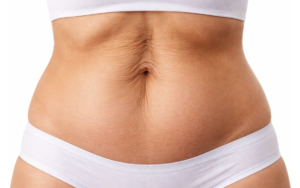
Abdominal separation is a separation and widening of the two rectus abdominis muscles (Six pack muscles) along the midline (linea alba) following pregnancy, due to stretching and thinning of the connective tissue.
This condition is known as diastasis recti postpartum and commonly develops during pregnancy.
During stomach separation during pregnancy, the tissue that runs down the centre of the stomach (called the linea alba) stretches so the abdomen can expand as the baby grows.
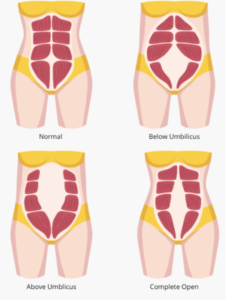
For many women, the abdominal muscles gradually regain tension after birth. However, if the tissue remains stretched, the muscles may struggle to work together effectively, leading to ongoing belly muscle separation. It presents in in various shapes:
Because the abdominal muscles and pelvic floor work as a connected system, this separation can influence core stability, posture, and movement.
Common Symptoms & Causes of Abdominal Separation
Postpartum abdominal separation (Diastasis Recti) can manifest in two main ways visually and on palpation:
- Bulging (protruding midline)
- Sinking (soft or concave midline)
In Diastasis Recti, the symptoms are often similar, but the movement pattern and load response differ depending on whether it presents as bulging or sinking.
- Bulging type (doming) diastasis recti
What you see:
- Midline protrudes outward (especially with curl-up, sit-up, coughing)
- Classic “tenting” or “ridge” along the linea alba
What’s happening biomechanically:
- The linea alba is stretched + lax, but still being pushed outward by intra-abdominal pressure
- Poor force transfer + poor tensioning of the abdominal wall
- Often overactivity of superficial muscles (rectus, EO) with under-recruitment of deep system (TA)
- Sinking type (concave / hollowing midline)
What you see:
- Midline sinks inward instead of bulging
- Looks like a trough or valley
- May appear during abdominal contraction or even at rest
What’s happening biomechanically:
- The linea alba is thin + poorly tensioned, and instead of resisting pressure, it collapses inward
- Often indicates insufficient fascial stiffness
- Sometimes excessive “hollowing” strategy (over-isolating TA without load sharing)
Diastasis can happen in different locations, depends on where the gap is:
Around the navel, below the navel, above the navel, open diastasis
Other common ab separation symptoms can include:
- A feeling of weakness in the abdominal area
- Difficulty activating deep core muscles
- Lower back discomfort
- Reduced stability during lifting or bending
Some women with diastasis recti postpartum also feel their abdomen lacks support when exercising or carrying their baby.
When Should You See a Pelvic Floor Physio?
Some separation improves naturally after birth, but not always. If symptoms persist or your core feels weak, a pelvic floor physiotherapist can assess how the muscles and connective tissue are functioning.
It may be helpful to seek support if:
- The abdominal gap remains months after birth
- You notice a bulge or sinking along the midline
- Your abdomen feels unstable during daily activities
- Back or pelvic discomfort develops
Assessment for diastasis recti postpartum helps determine the severity of the separation and guide treatment.
How Is Diastasis Recti Treated?
The treatment goal of Diastasis Recti is optimal tension in Linia alba, controlled intra-abdominal pressure, coordination system (TrA+ Obliques+ diaphragm + pelvic floor) rather than simply closing the gap.
Exercises are designed to rebuild coordination between the abdominal muscles, breathing patterns, and pelvic floor.
Targeted physiotherapy can reduce strain caused by the separation of the belly muscles and gradually improve strength and control. At Pelvic Prime & Physiotherapy in Brisbane, treatment plans help women safely rebuild core function following a pregnancy with a separated abdomen.
Supporting Your Postpartum Recovery
Recovering from abdominal separation after pregnancy takes time and the right guidance. Gradual strengthening and good movement habits can support healing.
If you’re experiencing symptoms of diastasis recti postpartum, early support can make recovery more effective.
Concerned about abdominal separation after pregnancy? Contact Pelvic Prime & Physiotherapy in Brisbane today to book a pelvic floor physiotherapy assessment and start rebuilding core strength.