
Understanding Mastitis: Treatment, Massage & Recovery
POSTED: 29 May, 2026
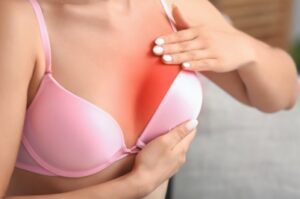
Mastitis is a painful breast condition that affects women, most commonly during breastfeeding, but not exclusively. Understanding your treatment options can make a profound difference in recovery.
Mastitis involves inflammation of the breast tissue, often accompanied by infection. While antibiotics are commonly prescribed, physiotherapy-based approaches — particularly therapeutic ultrasound, lymphatic drainage massage, and specific exercises — play an increasingly important role in both treatment and prevention.

_____________________________________________________________________________________________________________________________________
SECTION 1
What Is Mastitis?
Mastitis is an inflammatory condition of the breast that can occur with or without infection. It most frequently affects women during the first three months of breastfeeding (lactational mastitis), though it can also develop in non-breastfeeding women (non-lactational mastitis).
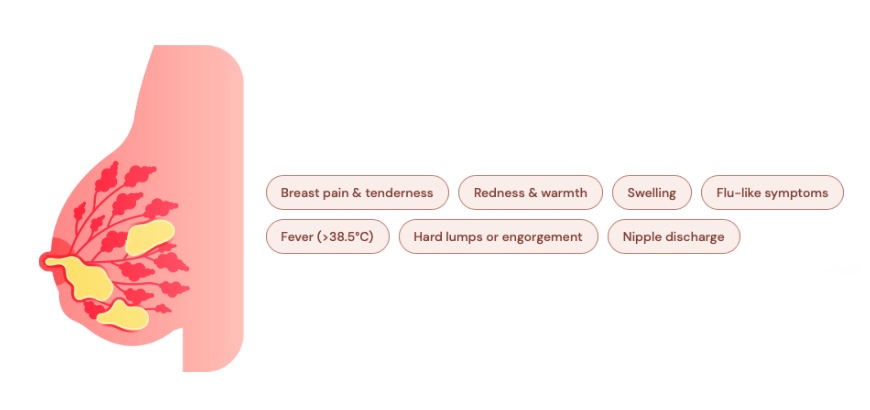
Common Symptoms can include
Types of Mastitis
Lactational mastitis is the most prevalent form, occurring when milk becomes trapped in the ducts due to poor latch, infrequent feeding, or blocked ducts. Bacteria — most often Staphylococcus aureus — can then colonise the stagnant milk.
Non-lactational mastitis (periductal mastitis) is associated with smoking, nipple inversion, and chronic inflammation of the ducts. It tends to recur and may require longer-term management.
If left untreated, mastitis can progress to a breast abscess — a pus-filled cavity requiring surgical drainage. Early physiotherapy intervention can significantly reduce this risk.
_____________________________________________________________________________________________________________________________________
SECTION 2
Therapeutic Ultrasound as a Treatment for Mastitis
Therapeutic ultrasound has been used in physiotherapy for decades to treat soft tissue injuries. It offers a non-invasive, drug-free adjunct to conventional care.
How Therapeutic Ultrasound Works
Unlike diagnostic ultrasound (which only images tissues), therapeutic ultrasound delivers mechanical energy via high-frequency sound waves (typically 1–3 MHz) into the breast tissue. This produces two key effects:
- Thermal effects: Deep heating of tissue increases local blood flow, accelerates cell metabolism, and promotes tissue extensibility — helping to clear blocked ducts and reduce localised inflammation.
- Non-thermal (cavitation) effects: Acoustic cavitation — the formation and vibration of tiny gas bubbles in tissue — enhances cell membrane permeability, promotes tissue repair, and may help break down inspissated (thickened) milk within ducts
- Improved lymphatic drainage: Mechanical stimulation from ultrasound waves encourages movement of fluid through the lymphatic vessels, reducing breast engorgement and swelling associated with mastitis.
_____________________________________________________________________________________________________________________________________
SECTION 3
Lymph Node Breast Massage for Mastitis
The breast has a rich lymphatic network that drains primarily to the axillary (underarm) lymph nodes, with secondary drainage to the parasternal and infraclavicular nodes. In mastitis, this system becomes congested — contributing to swelling, pain, and impaired immune response.
What Is Manual Lymphatic Drainage (MLD)?
Manual Lymphatic Drainage is a specialised, gentle massage technique that uses extremely light pressure to stimulate superficial lymphatic vessel contractions.
The goal is to redirect congested fluid away from the inflamed area and toward functioning lymphatic territories.
_____________________________________________________________________________________________________________________________________
SECTION 4
Exercises to Support Recovery
Specific exercises address the postural and musculoskeletal factors that can contribute to mastitis — particularly poor thoracic posture, pectoralis tightness, and restricted shoulder mobility that impair lymphatic drainage. These exercises are suitable during and after mastitis recovery.
Important Postural Considerations for Breastfeeding Mothers
Prolonged feeding positions — particularly hunching forward with a rounded thoracic spine — create sustained compression of the pectoral region and axillary space. This compromises lymphatic return and may predispose to duct blockage. Simple ergonomic changes, combined with the exercises above, can be transformative:
- Use a breastfeeding pillow to bring the baby to the breast rather than hunching to the baby
- Alternate feeding positions (cradle, football hold, side-lying) to vary duct drainage patterns
- Avoid bras that are too tight in the underwire or strap area
- Take regular standing/movement breaks every 30–45 minutes during long feeding sessions
_____________________________________________________________________________________________________________________________________
SUMMARY
Putting It All Together: A Holistic Approach
Mastitis management has evolved well beyond antibiotics alone. The evidence increasingly supports a multi-modal physiotherapy approach:
- Therapeutic ultrasound
- Lymphatic drainage massage
- Targeted exercises
Contact us today to book your physiotherapy assessment!
Booking with Pelvic Prime & Physiotherapy